Pollinator Item Code: LYIS-RATTLESNAKE-MASTER
Description
Rattlesnake Master is a striking native prairie perennial with blue-green, yucca-like foliage and round white flower heads that bloom in summer. It is a tough, drought-tolerant plant once established and is excellent for pollinator gardens, prairie plantings, meadow gardens, gravel gardens, and sunny native borders.
This plant is especially valuable for wildlife. Its flowers attract bees, wasps, flies, beetles, butterflies, skippers, and moths. Research has documented flower visitors from 6 insect orders and 33 insect families, so it is a strong choice for supporting a wide range of beneficial insects.
Rattlesnake Master grows best in full sun and lean, well-drained soil. It is most adapted to prairie-type soils, including sandy loam, gravelly soil, rocky soil, and well-drained clay loam. It can grow in clay as long as the site does not stay wet. In heavy clay, plant it slightly high or on a small mound so the crown can drain properly.
Avoid overly rich soil or heavy fertilizing, as this can make the plant grow too lush and floppy. A small amount of compost can help improve clay structure, but this plant generally prefers leaner mineral soil over rich garden beds.
Rattlesnake Master forms a deep taproot, so it is best planted while young and then left undisturbed. Mature plants can reach about 90-150 cm tall depending on growing conditions.
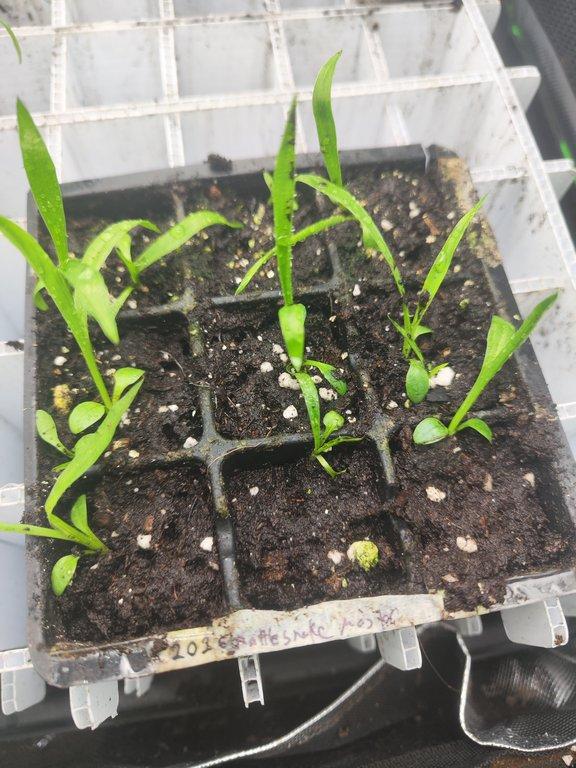
You will receive one live potted Rattlesnake Master seedling. Plant size varies by season.
Species Information
Rattlesnake Master (Eryngium yuccifolium) - Prairie Pollinator Powerhouse
Rattlesnake master is a striking native prairie perennial with stiff yucca-like leaves and round white flower heads that bloom in mid to late summer. It is a top-tier insectary plant, drawing in diverse native bees, wasps, butterflies, and beneficial predatory insects. The architectural form makes it a standout in pollinator gardens, meadow plantings, and naturalized prairie mixes.
Plants form a clump of narrow, tough leaves and send up tall flowering stems, typically reaching 0.8-1.5 m. The spherical blooms hold nectar and pollen over a long window, supporting beneficial insects during a period when many other natives have finished.
Rattlesnake master thrives in open sun with well-drained soils and handles dry spells once established. It is well suited to sandy, gravelly, and loamy sites, including slopes and lean prairie soils.
Why plant Rattlesnake Master:
- Exceptional pollinator and beneficial insect support
- Strong late-season nectar and pollen source
- Drought tolerant once established
- Long-lived perennial with dramatic form
- Excellent for prairie restorations and meadow gardens
Growing conditions: Full sun with well-drained soil gives best performance. Establishment is strongest with consistent moisture during the first season, then the plant becomes very drought tolerant.
Rattlesnake master adds structure, resilience, and high ecological value to native plantings.
Species Details
- Primary Trait: Beneficial Insects
- Minimum Winter Temperature: -40 °C
- Optimal Temperature: 22 °C
- Maximum Summer Temperature: 35 °C
- Light: 20000 to 110000 lux; optimal 70000 lux
- Rainfall: 400 to 1100 mm/yr; optimal 650 mm/yr
- Soil pH: 5.5 to 8.0; optimal 6.8
- Soil Fertility (CEC): 6.0 to 25.0 cmol/kg; optimal 12.0 cmol/kg
- Sand Content: 35.0 to 85.0%
- Clay Content: 0.0 to 20.0%
- Hydraulic Conductivity: 1.0 to 20.0 cm/hr
- Traits: Native, Pollinator Friendly, Drought Tolerant, Beneficial Insects
- Notes: Prefers well-drained sites. Transplant success improves with small plugs or young plants. Seed germination often improves after cold moist stratification.